


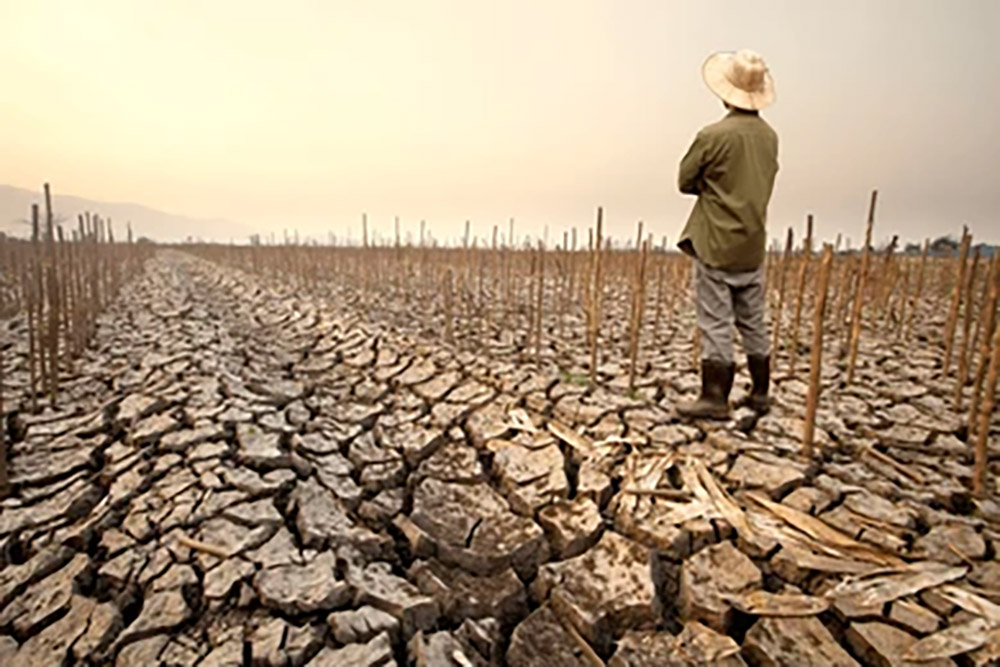
LUCENA CITY, Quezon, Philippines — Nearly 6,800 hectares of agricultural land in Quezon have been affected by El Niño-related dry conditions, prompting the provincial government to strengthen interventions to protect farmers’ livelihoods, sustain agricultural production and minimize further losses as drought conditions may persist until April 2027.
The situation was discussed during the Provincial Disaster Risk Assessment (PDRA) and Provincial Disaster Risk Reduction and Management Council (PDRRMC) Full Council Meeting on October 20, where provincial officials reviewed the latest climate outlook, agricultural situation reports and preparedness measures for prolonged dry conditions and Tropical Storm Champi.
Ferdie Valdeavilla of the Department of Science and Technology–Philippine Atmospheric, Geophysical and Astronomical Services Administration (DOST-PAGASA) presented the assessment and outlook on dry conditions, dry spells and drought. Based on observed rainfall from April to September 2026 and forecast rainfall from October 2026 to March 2027, drought conditions may persist or worsen until April 2027, underscoring the need for sustained preparedness and timely interventions.
According to the Provincial Agriculture Office, approximately 6,130 hectares of the affected agricultural land are planted with rice, 200 hectares with corn, and 436 hectares with vegetables and other crops. Dr. Liza Mariano of the office reported that 10 local l Tagkawayan, Polillo, Mulanay, Catanauan, San Narciso, General Luna, Jomalig and Alabat. These reports will help the provincial government assess local conditions and determine appropriate assistance for affected agricultural communities.
Governor Helen Tan has directed local government units to submit situation reports to guide provincial planning and ensure that interventions address the needs of affected farmers. The Provincial Agriculture Office is coordinating with municipal agriculture offices to encourage water storage in farm reservoirs and the prepositioning of seeds, seedlings and fertilizers, while promoting climate-smart farming practices to help sustain agricultural production under prolonged dry conditions.
Mariano also emphasized the need for vigilance against pest and disease outbreaks that may threaten crops during prolonged dry conditions. The Provincial Agriculture Office is strengthening agricultural surveillance, prompt reporting and information campaigns in coordination with municipal agriculture personnel. The membership of the provincial El Niño task force is also being organized to strengthen coordination among concerned offices.
Meanwhile, Dr. Melchor Abenilla of the PDRRMC outlined measures to maintain round-the-clock Emergency Operations Center operations, monitor PAGASA advisories, issue early warnings and coordinate with LGUs and response agencies. Under the direction of the Office of the Provincial Governor, the PDRRMC is also coordinating with water service providers to position water tankers in high-risk municipalities and barangays where wells may run low, ensuring access to water for drinking, hygiene and emergency needs.
The province is also strengthening public health preparedness through drinking water testing, treatment and proper storage; monitoring heat-related illnesses; and establishing hydration and oral rehydration therapy corners. Other measures include checking generators and reserve fuel supplies and preparing Health Emergency Response Teams and sanitary inspectors to respond to water, sanitation and hygiene concerns during emergencies.
To build long-term resilience, agricultural measures include farmer training, solar-powered irrigation, diversified crop production, integrated farming systems and drone-assisted mapping of watersheds, protected areas and agricultural lands.
Through these coordinated efforts, the provincial government and LGUs aim to minimize further agricultural losses, protect farmers’ livelihoods and strengthen communities’ capacity to cope with prolonged drought.(CCM – PIA Quezon)