


By Rachel Magday
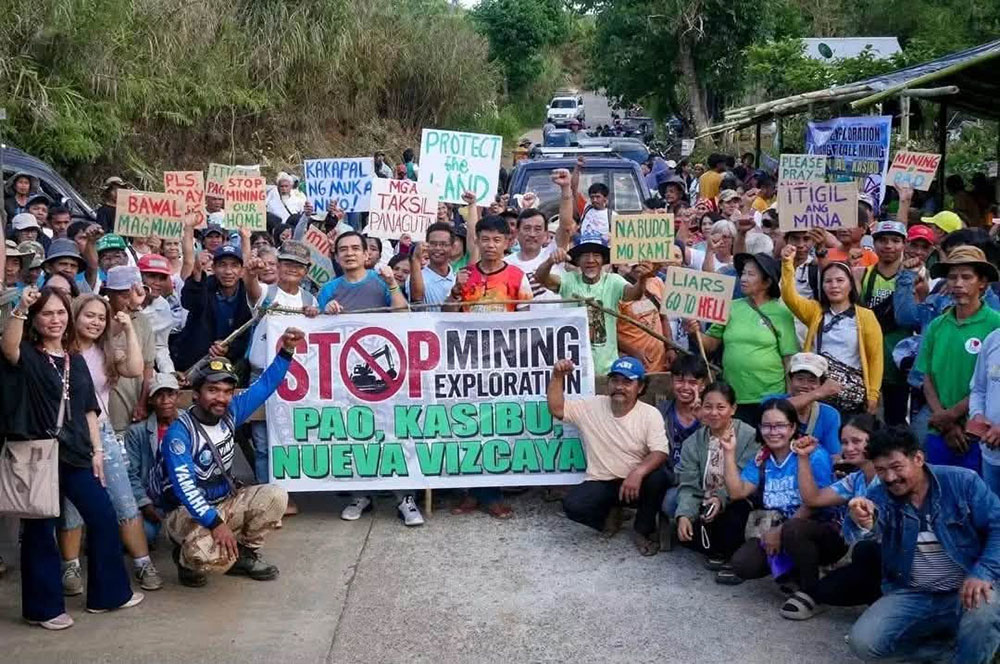
NUEVA VIZCAYA, Philippines — No mining or development project should move forward at the expense of Indigenous Peoples’ rights, National Commission on Indigenous Peoples (NCIP) Commissioner Puricismo L. Tiam said, as tensions persist over a mining-related issue involving communities in Barangay Pao, Kasibu.
Tiam called for a peaceful and transparent resolution of the issue, saying the government must first determine whether the proposed exploration area overlaps with ancestral domains and whether the required Free, Prior and Informed Consent (FPIC) process was properly carried out.
“Mining and economic development should never require us to disregard Indigenous Peoples’ rights,” Tiam said in an interview with members of the Nueva Vizcaya Press Club. “At the same time, disagreements should be resolved peacefully and through lawful processes.”
The NCIP commissioner said the agency’s role is not to take an automatic pro-mining or anti-mining position, but to enforce the law and safeguard the rights of Indigenous Cultural Communities and Indigenous Peoples.
“Our responsibility is neither to be automatically pro-mining nor anti-mining,” he said. “Our responsibility is to uphold the law and, above all, to ensure that the rights of Indigenous Cultural Communities and Indigenous Peoples are fully respected.”
Tiam said the Indigenous Peoples’ Rights Act (IPRA) and regulations governing FPIC must be “faithfully observed” in cases where ancestral domains or Indigenous communities may be affected.
Under the process, consent must be freely given by affected communities before a project proceeds and only after they have been provided complete and understandable information on its possible effects.
Tiam also urged authorities and concerned groups to avoid confrontation amid the barricade issue linked to the controversy.
“I do not believe that this issue should be resolved through confrontation,” he said, warning against violence, intimidation and actions that could further heighten tensions.
He called on the government to convene meaningful dialogue involving affected ICCs/IPs and communities, the local government, NCIP, the Department of Environment and Natural Resources-Mines and Geosciences Bureau, the mining proponent, law-enforcement agencies and other stakeholders.
Before any conclusion is made, Tiam said, officials must establish the facts through official records: the exact areas covered by the proposed exploration; whether ancestral domains are affected; the Indigenous groups that may be impacted; consultations and FPIC proceedings already conducted; and the permits and certifications issued for the project.
“These questions should be answered transparently and on the basis of official records,” he said.
Tiam said the legal rights and permits of other parties should likewise be examined objectively and in accordance with law, but stressed that such review must not diminish the protections accorded to Indigenous communities under IPRA.
“Let the law prevail, let due process prevail, and let the voices of the affected communities be heard without fear,” he said.
The commissioner said NCIP officials should act as “bridge-builders” in the conflict, helping bring parties to the table, verify the facts and ensure the protection of rights guaranteed by law.
He said it would be irresponsible to prejudge the outcome while the facts and legal processes have yet to be fully established.
“NCIP must remain faithful to its mandate—to recognize, protect, and promote the rights of Indigenous Cultural Communities and Indigenous Peoples,” Tiam said.