


By Ruben Veloria
ZAMBALES, Philippines – Gov. Hermogenes Ebdane Jr. approved a resolution declaring the province of Zambales under a state of calamity following the combined effects of the enhanced southwest monsoon and tropical cyclones, which have caused nearly P690 million in infrastructure damage and agricultural losses.
The declaration was based on the recommendation of the Provincial Disaster Risk Reduction and Management Council (PDRRMC) through a resolution submitted to the Sangguniang Panlalawigan of Zambales on Aug. 19, 2026.
The Sangguniang Panlalawigan adopted the resolution on Friday, citing that the combined monsoon and tropical cyclones resulted in widespread flooding, soil erosion, landslides, infrastructure damage, and agricultural losses, disrupting work and transportation while displacing thousands of residents from their homes.
Following Ebdane’s approval, the PDRRMC reported that total damage to infrastructure and agriculture has reached P689,934,396.90.
Meanwhile, the Department of Public Works and Highways (DPWH District 1 and 2) estimated the significant infrastructure damage at P569,268,797.73, with replacement costs potentially reaching P1,284,434,539.32.
Damage to flood control infrastructures was estimated at P96,850,131.06, while repairs and rehabilitation would require P114,000,000.
The Department of Agriculture, on the other hand, reported losses of P22,711,668.11 after severe flooding devastated farmlands, destroying rice and vegetable crops.
The Provincial Veterinary Office (PVO) reported total losses of 190 livestock valued at P1,103,800. Continuous rainfall from the enhanced monsoon caused flooding across many areas of the province, forcing 5,770 families or 17,317 individuals to evacuate to evacuation centers and other safer locations.
The PDRRMC has consolidated all reports and damage assessments from local government units and provincial offices, determining that the magnitude and geographic spread of the impacts require coordinated provincial-level intervention.
The destruction of critical and lifeline infrastructures, particularly roads, bridges including the Santa Fe Bridge and extensive flood control structures, has severely affected accessibility and the delivery of essential assistance to affected communities.
The declaration of a state of calamity will facilitate strengthened coordination of response, early recovery, and rehabilitation measures, enabling concerned government offices and local government units to undertake appropriate actions.
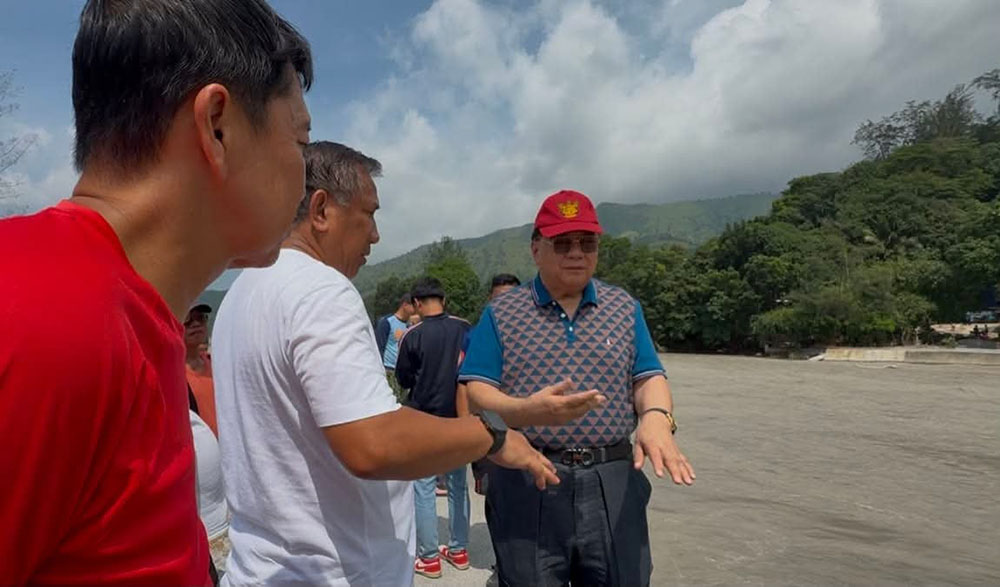
Ebdane noted that most affected residents were those along coastlines and in upper communities where protective dikes were damaged due to heavy loads of lahar in Santa Fe, San Marcelino and along the Bucao River in Botolan.
However, due to the quick response of the Provincial Engineering Office and DPWH, the damage has been contained, preventing heavy flooding in eight barangays adjacent to the river. The governor recommended that the DPWH prioritize rehabilitation of damaged dike portions rather than constructing new ones.
He also suggested that the national DPWH office begin clearing operations of waterways and canals during the summer of before the rainy season arrives.
As chairman of the Regional Development Council (RDC), Ebdane also recommended that the DPWH and other concerned national agencies consult local executives such as governors and mayors to expedite the process. “In this regard, we can reduce government costs by using the ‘by administration’ method, or direct project management.
As a former Secretary of the DPWH, I can say that this method is tried and tested; that is what we implemented before. In fact, if the process is ‘by administration’, only about one-third of the usual cost would be needed,” he said. “The government will save a significant amount, and we will be able to carry out even more projects for other areas.
Finally, I hope that these proposals will be conveyed not only to the DPWH but also to Congress and the Senate, so that they reach the proper authorities and are used for the good of our country.”