


By Christopher Hedreyda
LOS BAÑOS, Laguna, Philippines — As the Association of Southeast Asian Nations (ASEAN) celebrates its 59th anniversary, the ASEAN Centre for Biodiversity (ACB) is calling on ASEAN member states to commit to the regional bloc’s vision of restoring degraded ecosystems and further supporting protected areas through science- and knowledge-based restoration efforts.
In his ASEAN Day message, ACB Executive Director Dr. Jerome Montemayor laid out the initiatives being undertaken by the region’s center of excellence for biodiversity conservation and sustainable use.
The ACB, in partnership with the Department of Environment and Natural Resources, will hold an ASEAN Heritage Parks Forum in September as part of the Philippines’ 2026 ASEAN Chairship.
Themed “Navigating Sustainable Future for ASEAN Heritage Parks,” the forum will bring together park managers, experts, stakeholders, and partners from across ASEAN member states in Manila to highlight the vital role that ASEAN Heritage Parks play as anchors of resilience, prosperity, and people empowerment.
“[It] aims to showcase and facilitate the exchange of best practices and innovative approaches to AHP management from the Philippines and to contribute to the effective and sustainable management of protected areas across the ASEAN member states,” Montemayor said.
In relation to people empowerment and emphasizing the shared goals of multi-sectoral cooperation for biodiversity, the ACB is reintroducing the ASEAN Green Initiative (AGI), a merit-based recognition program for outstanding ecosystem restoration efforts in Southeast Asia.
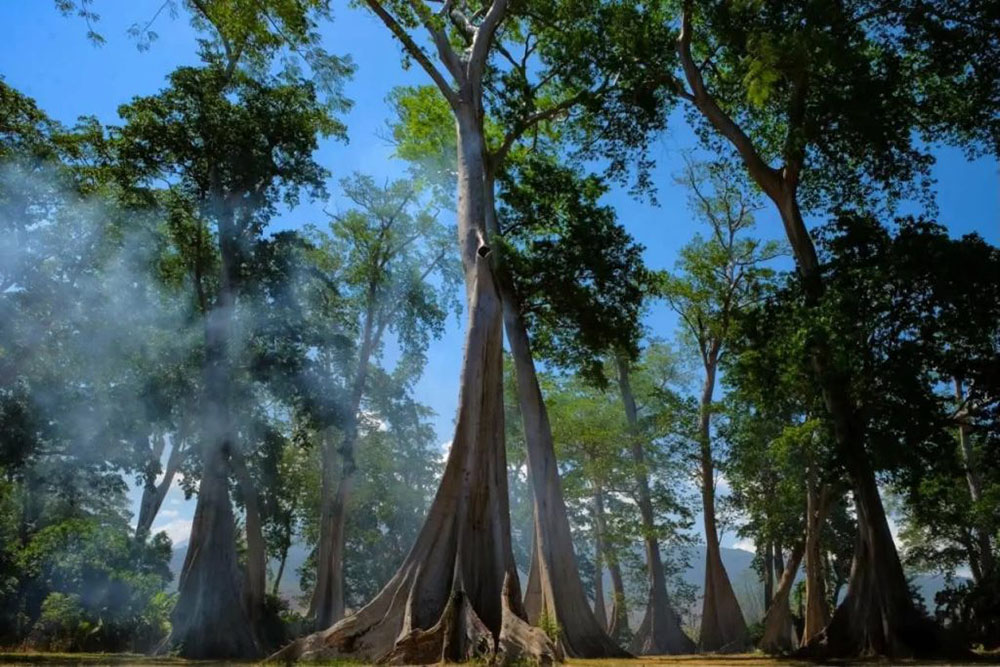
The initiative also calls on outstanding individuals and organizations to join the planting of 10 million native trees across ASEAN member states over a ten-year period.
Among the awardees under the Medium-Scale Category is the Daang Kalikasan Native Trees Arboretum and Ecological Restoration Initiative of Pangasinan Native Trees Enthusiasts Inc., which was recognized for planting 101 to 5,000 native trees in its area.
Montemayor recognized the organization’s vital work in the conservation, propagation, and promotion of science-based restoration of Philippine native tree species.
“The project established a living arboretum and long-term sustainable maintenance systems, thereby providing educational opportunities and contributing to biodiversity conservation, watershed protection, climate resilience, and environmental awareness,” he added.
Through these efforts, the ACB director noted recent discoveries in several ASEAN member states where species previously identified as critically endangered have been spotted and observed again in some ASEAN Heritage Parks. He said these sightings signal new beginnings and a testament that continued environmental initiatives being done are effective in restoring biodiversity.
“While recent sightings of these “long-hidden” species may be attributed to several factors like ecosystem recovery, news like this does not only renew our hope—it further amplifies the urgent need to improve protected area management and boost ecosystem restoration efforts to prevent, halt, and reverse habitat and biodiversity loss,” he stressed.
Apart from the AGI, the Center will also open the call for nominations for the next ASEAN Biodiversity Heroes, which recognizes ASEAN citizens whose exemplary efforts in biodiversity conservation and sustainable management in their respective countries create significant positive impacts in the region.
Montemayor emphasized, “We call on governments, civil society, the private sector, and every citizen to be part of these efforts to protect our web of life. Together, let us continue navigating a sustainable and greener future for ASEAN. Happy ASEAN Day!”
In accordance with the ASEAN Biodiversity Plan and the Kunming-Montreal Global Biodiversity Framework, to which ASEAN member states are signatories, the target of restoring 30 percent of all degraded ecosystems is being pursued through science- and knowledge-based restoration efforts.
These include enhancing scientific knowledge exchange, incentivizing best practices in the region, supporting the establishment of nurseries, and enhancing natural propagation sites for native plants and trees across ASEAN. (CH/PIA-CALABARZON; with reports from ACB)