

By Yvonne Gracious T. Elegado
CONNER, Apayao, Philippines — Inside the barangay hall of Nabuangan, Conner, Apayao, a wall of documents tells its own story. Legal papers, financial records, and sub-project details are pinned to a bulletin board where any resident can walk up and read them.
For Eleazar C. Señerez, 29, chairperson of the Barangay Development Council’s Technical Working Group, that board is one of the clearest signs that the Department of Social Welfare and Development Field Office Cordillera Administrative Region (DSWD FO CAR) Kapit-Bisig Laban sa Kahirapan – Comprehensive and Integrated Delivery of Social Services (KALAHI-CIDSS) Program keeps its word to the community it serves.
Señerez has volunteered with the program for three years. In that time, he has watched information move from program staff to household doorsteps through barangay assembly meetings, formal letters routed through the Punong Barangay, and group chats managed by fellow volunteers. Among all of this, the audit and inventory meetings stood out most to him.
“What stood out to me most was during the audit and inventory meeting is they explain clearly where the funds was used even to the smallest centavo,” Señerez said.
Access to information was not limited to those who attended meetings. The barangay hall’s bulletin board displayed budgets, timelines, and decisions on the sub-project for everyone to see, and volunteers walked residents through the details piece by piece during regular gatherings. Señerez said this openness extended to marginalized sectors, who were also part of the audiences the program made a point of reaching.
That same openness carried into planning. Señerez said he was involved from the start of the process and felt free to raise questions without hesitation. When disagreements surfaced, he saw how the program handled them.
During one planning cycle, residents pushed to prioritize sub-projects in their own puroks and sitios. Rather than dismiss the concern, staff from KALAHI-CIDSS, the Municipal Planning and Development Council, and the Municipal Engineering Office sat down with the community, walked through documents and presentations, and explained how prioritization followed the program’s established implementation process.
Not every exchange was smooth. Señerez recalled a period when a language barrier caused a small misunderstanding among some residents. Community volunteers stepped in right away, re-explaining the matter in the barangay’s local dialect so nothing was lost in translation. Señerez said the confusion cleared quickly and the community’s trust in the program never wavered.
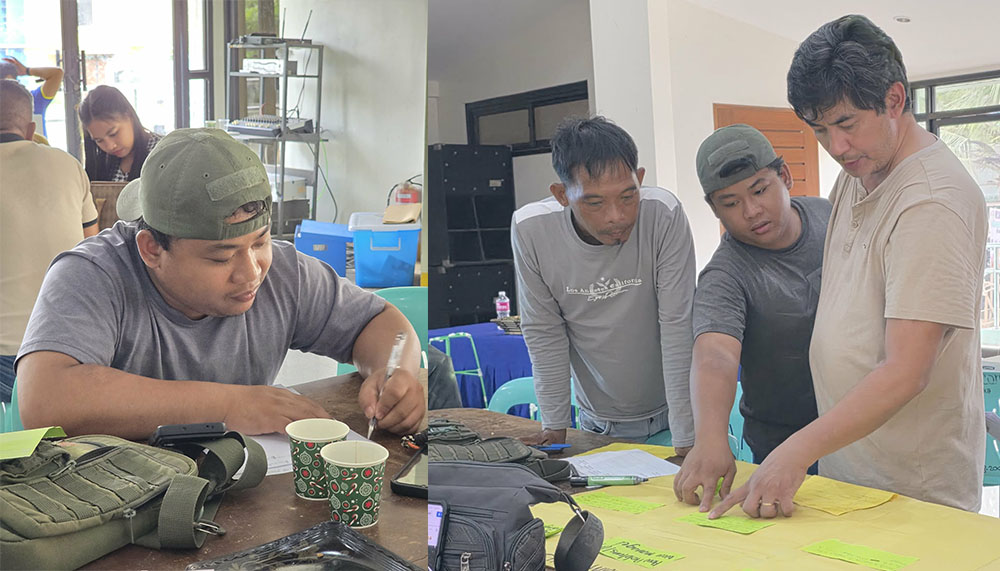
That trust, he said, grew out of consistent effort to bring people into the process. Barangay assemblies, workshops, trainings, and seminars became venues where elders, youth, women, members of the LGBTQ+ community, and groups like the farmers’ association could take part and gain a fuller understanding of the program.
“Transparency plays a very important role in every process, project progress, funding allocations and other necessary information of any project or program aside from KALAHI-CIDSS, because it helps build trust and prevent rumors and doubts of the community to the program’s processes,” Señerez said. He added that when residents can voice their comments and opinions, they develop a sense of belonging and ownership over the project, and that open information helps catch errors early before they grow into bigger problems.
For Señerez, transparency is not complicated. It means telling the community everything, opening every decision to them, and accounting for every centavo spent.
—