


By Elsha Marie S. Arguel
LINGAYEN, Pangasinan, Philippines — More than 25,000 families in Pangasinan were affected by the enhanced southwest monsoon (habagat) intensified by Tropical Storm Maymay (international name: Kujira), prompting local authorities to activate disaster response measures that helped protect communities despite widespread flooding and infrastructure damage.
The Provincial Disaster Risk Reduction and Management Office (PDRRMO) reported that, as of 11 a.m. on August 7, a total of 25,672 families, or 93,316 individuals, from 96 barangays in Agno, Anda, Bani, Basista, Bolinao, Calasiao, Lingayen, Pozorrubio, Sison, Balungao, and Alaminos City had been affected by the weather system.
Authorities reported no casualties, attributing this to continuous monitoring, early warning dissemination, and preemptive evacuation efforts in vulnerable communities.
Initial damage assessment placed total losses at P117.65 million, including P12.15 million in agriculture, primarily affecting rice, corn, and high-value crops, and P105.5 million in partially damaged infrastructure.
Three houses were also damaged, including one that was totally destroyed.
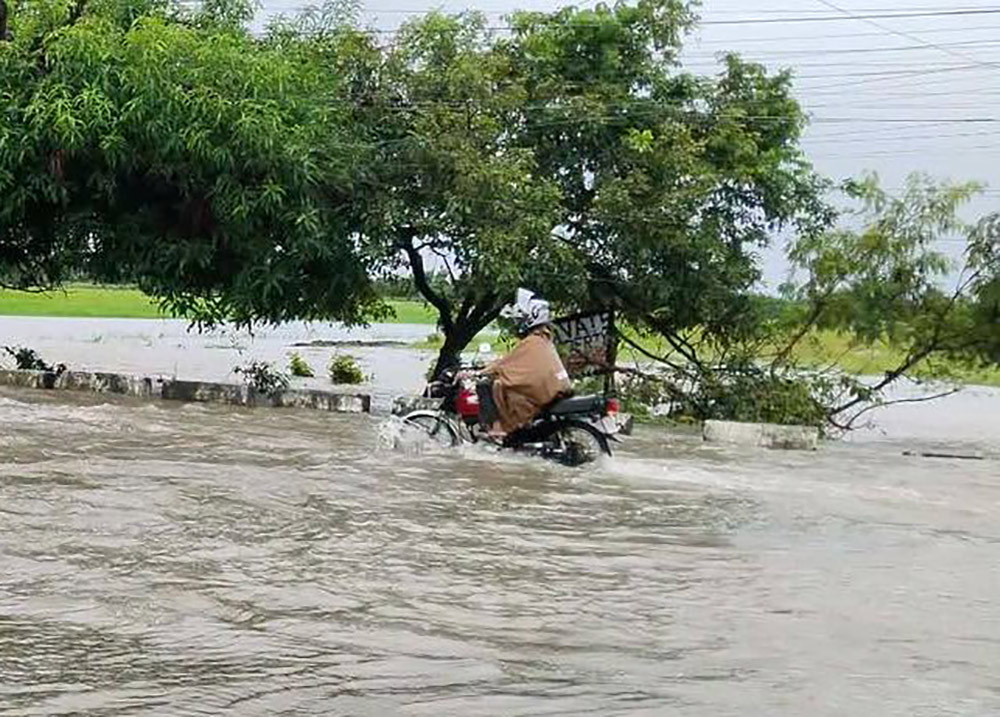
The heavy rains triggered flooding in 52 barangays, two rain-induced landslides, river embankment erosion, and a fallen utility post.
Floodwaters also rendered several barangay, provincial, and national roads impassable, while rough sea conditions temporarily halted boat trips to the Hundred Islands National Park.
Ahead of the weather disturbance, the PDRRM Council placed response teams on heightened alert, prepositioned rescue equipment and relief supplies, and maintained round-the-clock monitoring through its emergency operations center.
The council also carried out preemptive evacuations, moving 41 families, or 123 individuals, to designated evacuation centers before conditions worsened.
To support affected communities, the Provincial Social Welfare and Development Office readied 4,518 family food packs and other relief items for immediate distribution as needed.
The coordinated response highlights the importance of disaster preparedness and local government readiness in reducing risks as the country continues to face stronger and more frequent weather disturbances linked to a changing climate.
Protecting lives, safeguarding food production, and restoring damaged infrastructure remain key priorities as assessment and recovery efforts continue. (AMB/EMSA/PIA Pangasinan)