


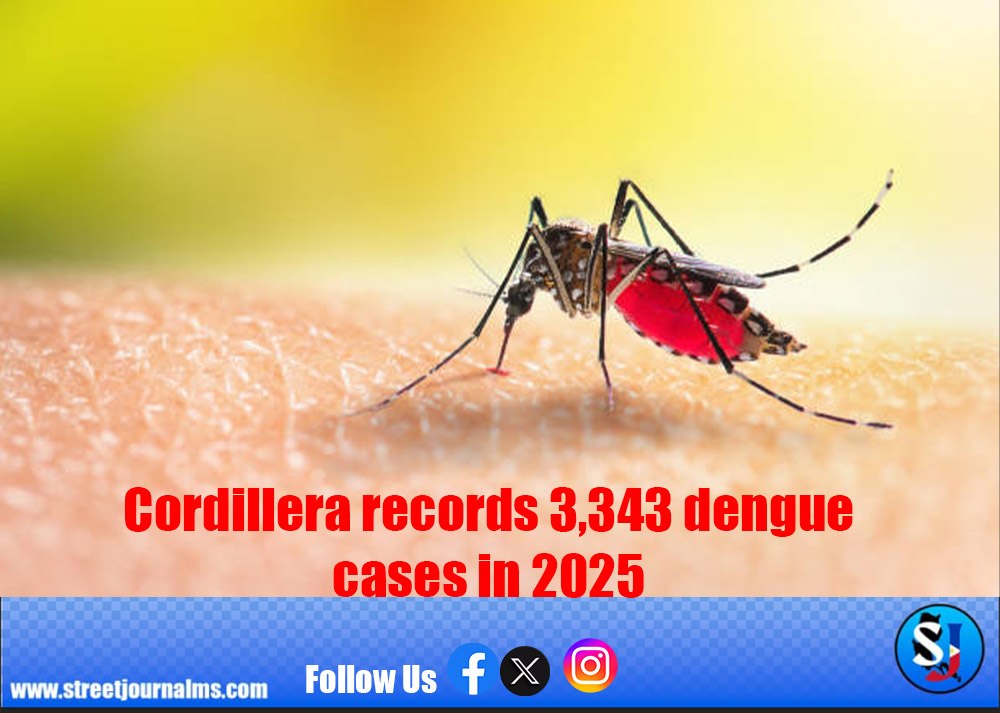
BAGUIO CITY, Philippines — A total of 3,343 dengue cases were recorded in the Cordillera region, killing ten people in 2025.
In the past months of 2026, the region recorded 2,315 cases with three deaths, reflecting an average 31 percent decrease in the six provinces and cities. However, Ifugao recorded an 8 percent increase in cases.
Based on clinical classification, of the 2,315 reported patients, 1,362 had dengue without symptoms, of which 606 were admitted to medical facilities.
Meanwhile, 945 patients had symptoms, of which 767 required hospitalization. Eight cases were classified as severe dengue, six of whom were admitted to medical institutions
The latest epidemiology situation of dengue in the Cordillera, including trends in cases, deaths, and prevention strategies, was presented at the First Dengue Summit, on July 16.
The summit also introduced the ASEAN campaign, “ASEAN United: Zero Dengue Death – A Future We Build Together by 2030.”
Dengue data from 2009 onwards showed cyclical patterns, with relatively low numbers of cases in 2009, 2014, 2017, and 2020, followed by significant increases in 2022 and especially in 2024.
Data on dengue cases by age group show that children aged 1 to 10 years recorded the highest number of infections, with 342 male and 304 female patients. This was followed by the 11 to 20 year old age group, with 303 male and 231 female cases. Infants under one year of age recorded the fewest cases, with 39 male and 21 female cases.
Dr. John Alfred of the Department of Health–Cordillera also reported the presence of Chikungunya in the region, with five cases recorded from January 4 to July 4, 2026, representing a 25 percent increase compared to the same period last year. Specimens collected and tested yielded negative results, and no deaths were recorded.
For Chikungunya, 61 cases with no deaths were reported in 2024, while 25 cases with no deaths were recorded in 2025. An overall decrease was observed in six areas, except for Abra, which recorded a 367 percent increase, from three cases in 2024 to 14 cases in 2025.
According to Cabilan, the World Health Organization (WHO) has received reports of 14,434,584 dengue cases worldwide, of which 7,718,585 were laboratory confirmed.
The cases include 52,738 severe infections and 11,201 deaths across the six WHO regions.
The Americas Region accounts for more than 90 percent of the total number of cases worldwide, where dengue is transmitted at levels unmatched worldwide.
Participants were also reminded of the enhanced dengue prevention campaign, now known as the 4S and 4T Kontra Dengue: Search and Destroy Mosquito Breeding Places, Self-Protection Measures, Seek Early Consultation, Say Yes to Fogging, and Taob, Taktak, Tuyo, Takip (overturn, shake, dry, and cover). These strategies are aimed at sustaining efforts in reducing dengue cases and preventing dengue-related deaths.